Cover Photo Credit: Gerard Don, Bax Innovation
How do we take carbon farming out of theoretical policy debates and turn it into a practical, profitable reality for European farmers?
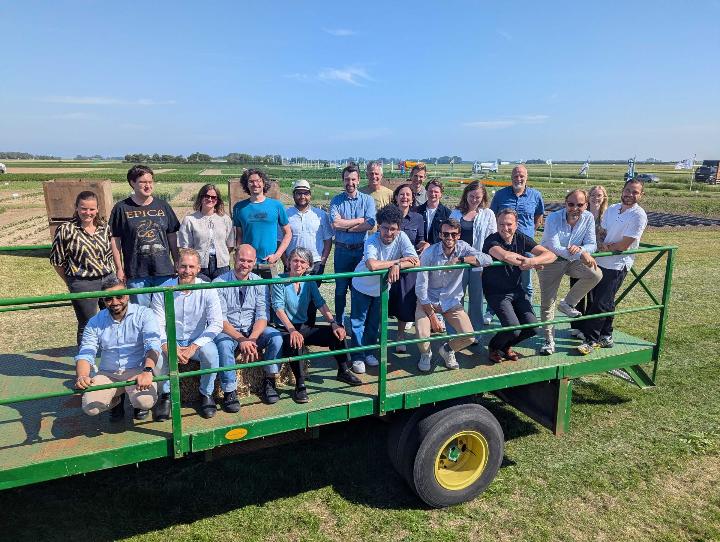
That was the driving question behind the 8th Smart Carbon Farming (SCF) Partner Meeting. Hosted by ZLTO with support from Bax Innovation, 25 representatives from across North-West Europe, spanning research institutes, AgTech pioneers, regional authorities, and farming organizations, gathered in Zeeland, Netherlands, for three days of intense collaboration, field trips, and policy design.
Some major breakthroughs, real-world data, and future roadmaps emerged from this partner event.
Real-world data from the field
A presentation from Windpark Krammer carbon farming pilot, presented by Sam Wisse and Luuk van Wezel, was a main part of the gathering, showing real-numbers from working directly with 15 local pioneer farmers. Through the pilot’s multi-year soil measurement analysis, the SCF partners learned that the pilot sequestered an estimated 3,300 tonnes of CO2.
To ensure credibility and account for the natural variables in soil dynamics, the pilot team deliberately applied highly conservative calculations, using 80% of the lowest range values.
Beyond measurement, the pilot is testing fair economic models to empower farmers, such as hybrid financial structure and balance risk. Respectively, farmers receive between €100 to 140 per tonne of carbon, and payments are split into 70% action-based rewards (for adopting regenerative practices immediately) and 30% result-based rewards (for long-term ecological outcomes).
Local Trust Meets Regional Policy
A core takeaway from the event’s Policy Roundtable, chaired by Marjon Krol, was that top-down targets mean little without local trust. While national and EU governments need to establish clear, standardized definitions and market safeguards, actual transformation happens from the bottom up. Regional authorities, like the Province of Zeeland, emphasized that effective policies must allow for regional flexibility rather than enforcing rigid, blanket mandates.
During the policy design workshop, partners outlined a vision for a goal-oriented EU framework: setting clear targets for climate and soil health, while giving farmers the autonomy to choose the methods that best fit their unique land. To track progress seamlessly, the team recommended combining flexible digital tools, such as voluntary soil passports and digital biodiversity scorecards, over rigid, single-metric systems.
Regenerative Farming on the Ground
Policy and data only tell half the story. The consortium stepped out of the meeting rooms and into the field to connect directly with working landscapes at the 'Open Day Rusthoeve' and Berend Boone’s arable farm in Zeeland.
Walking through thriving regenerative potato and onion fields gave partners a firsthand look at healthier soil structures, alongside a vivid reminder of the real risks farmers face every day, from unpredictable hail storms to extreme weather shifts.
Creating Enduring Change
As the project approaches its final stages, the consortium is focused on building long-term infrastructure that outlasts the active project lifecycle. On the market front, this means advocating for standardized rules and targeting a carbon credit price of €200 per tonne to guarantee healthy, sustainable margins for farmers. To keep innovation accessible, all project data, blueprints, and protocol guides will be fully open-sourced, backed by regional "lighthouse" demonstration farms that showcase real-world viability. Finally, to empower the next generation of carbon farmers, the project’s peer-learning resources and e-learning modules will be permanently signposted on major EU platforms, including the EU Farm Book.
"We leave Zeeland energized and focused on our core mission: empowering farmers with the long-term clarity and trust they need to grow resilient, future-proof farms." — The Smart Carbon Farming Consortium