Originally published on Boerenbond
Farmers, researchers, companies, and other organizations descended on Lennik on October 26 for the Flemish Carbon Farming Day. A day full of practical examples, new technologies, and discussions about the opportunities and challenges of carbon farming. And for that, we didn't start in a meeting room, but out in the field, hands-on.
In the morning, we were guests at the farm of Stijn Carton, one of the six Flemish pilot farms within the Smart Carbon Farming project. Stijn recently took over the farm from his father, who was also present that day. This involvement immediately made it clear how much knowledge and experience is passed down from generation to generation within a farm, while at the same time there is room to try out new ideas.
Stijn explained how he views his soil and business operations today. In doing so, he focuses strongly on regenerative agriculture.
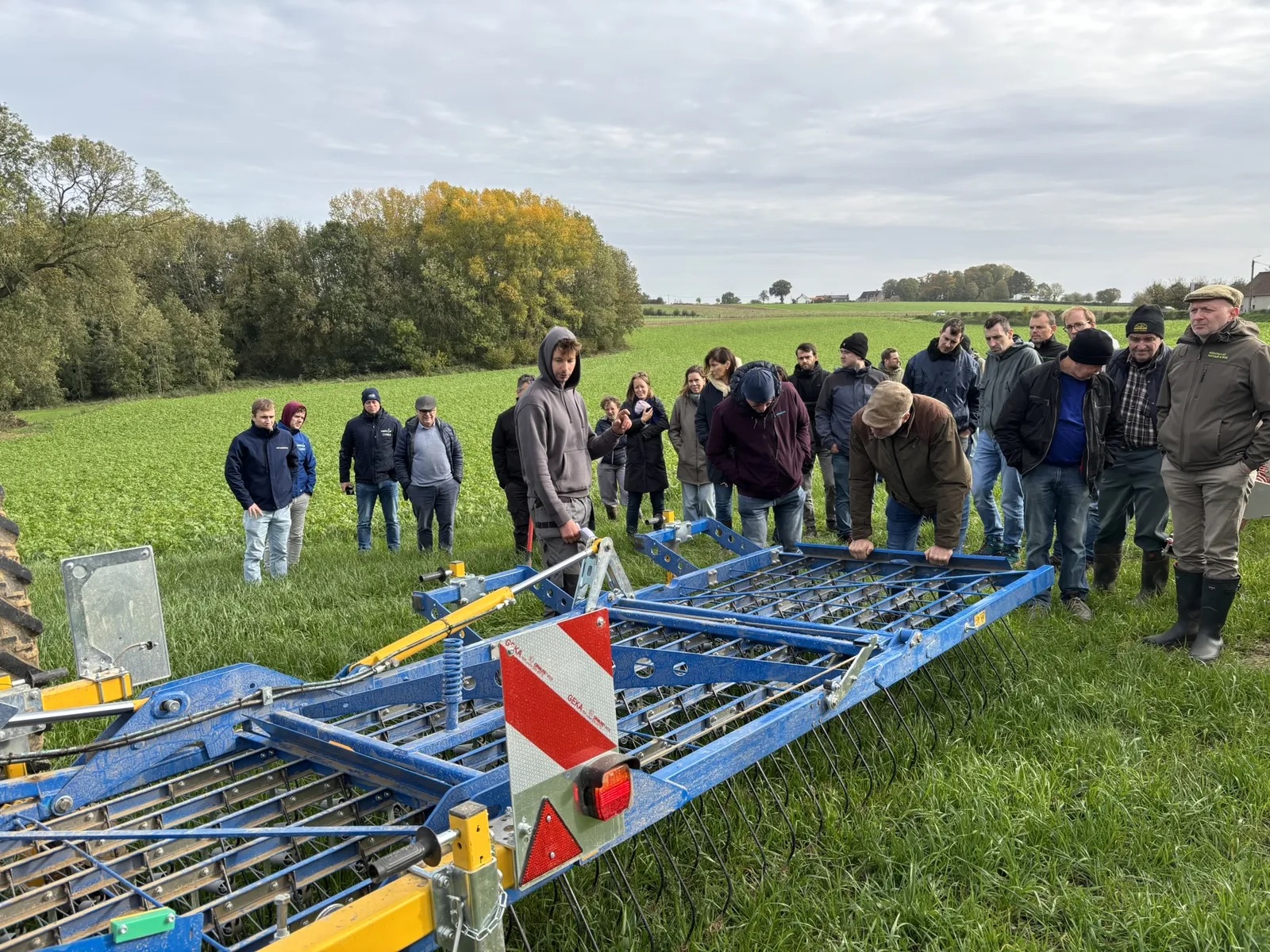
Photo: Visitors examine a tine weeder during the field demonstration.
We also took a look at the cover crop that was sown in September. With this cover crop, Stijn aims to get as much life as possible into his soil. He describes it himself as creating a real 'fungus factory'. Fungi form networks in the soil that contribute to soil structure and play a role in the availability of nutrients. For Stijn, therefore, looking at soil fertility does not stop at the classic nitrogen, phosphorus, and potassium. According to him, trace elements also deserve attention to get a more complete picture of what is happening in the soil and what it needs.
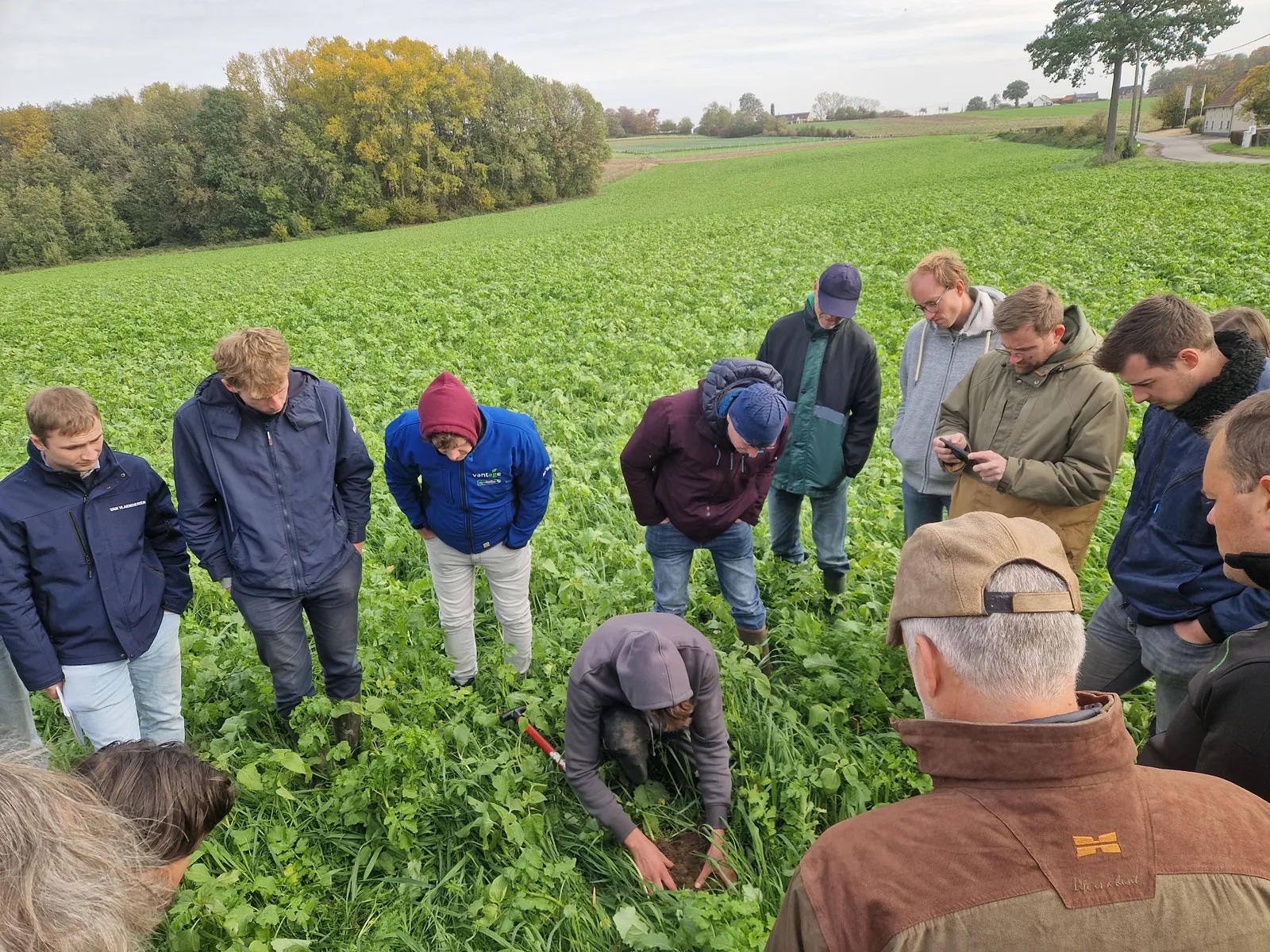
Photo: Participants look on as a soil sample is dug from the cover crop.
Measure to understand better
But what exactly happens beneath the soil surface? And how can we map that increasingly better? That is where the research came into play.
ILVO demonstrated a e-robot being developed within Smart Carbon Farming. The robot can measure soil compaction, among other things. The intention is to also enable measurements of organic carbon, pH, and nitrogen. The technology will subsequently be tested at the six Flemish pilot farms and pilot farms from Germany, the Netherlands, and France, among others, within the project.
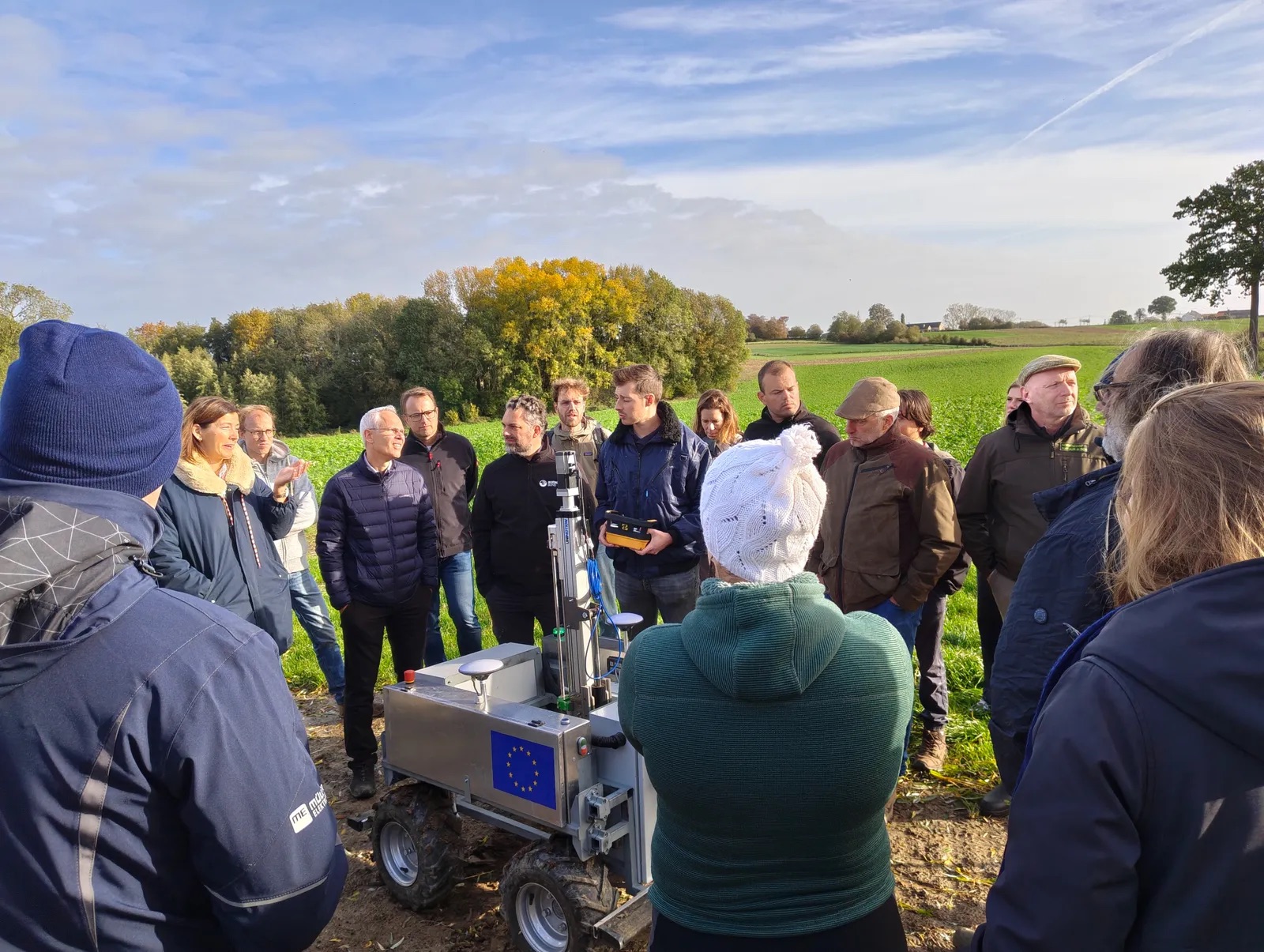
Photo: Visitors gather around the Smart Carbon Farming robot in the field.
Agrometius also demonstrated what is already possible today. A soil scan had recently been carried out on Stijn's plot. Based on those results, we gained an idea of the information such a scan can provide. But at least as interesting were the practical questions surrounding it: how much does such a scan cost, what information do you get in return, and what can you do with it as a farmer?
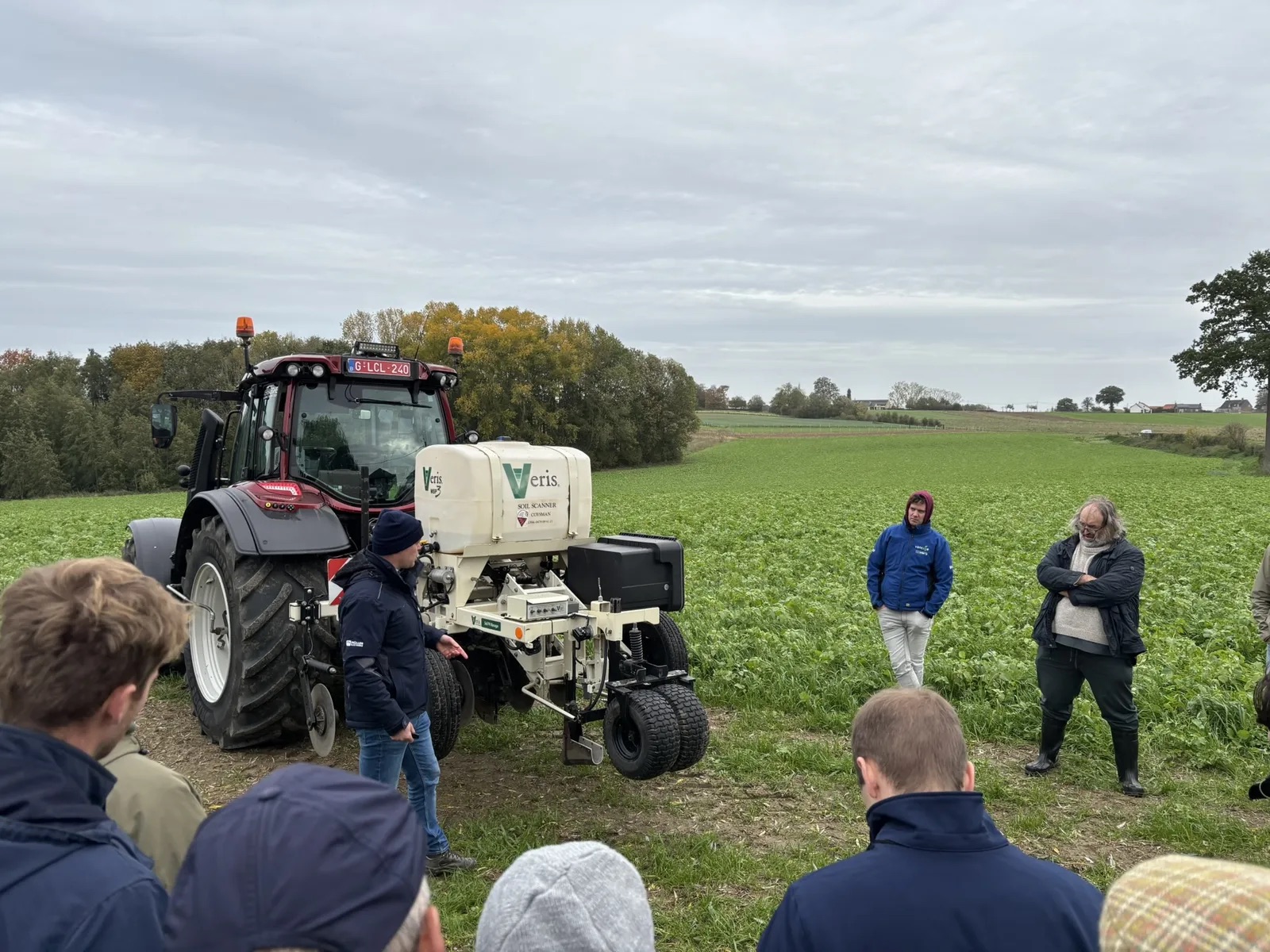
Photo: A Veris soil scanner mounted on a tractor, presented to visitors in the field.
In this way, different perspectives came together beautifully on a single plot: the farmer's experience, new insights from research, and technology that can help to better understand what happens in the soil.
From good practice to a viable business model
After the morning in the field, we moved indoors, where the story broadened. Knowing which measures are good for soil and climate is one thing. At least as important is how farmers can put them into practice and are also compensated for their efforts.
A series of short pitches showed that there is already a lot of activity surrounding this. Claire CO₂, Farming for Climate, and Arvesta (with the Carbon Farming Club) each explained their approach, making it immediately clear that there is no single way to put carbon farming into practice. KBC highlighted the financial side: what could the climate transition mean for investments and insurance in the agricultural sector?
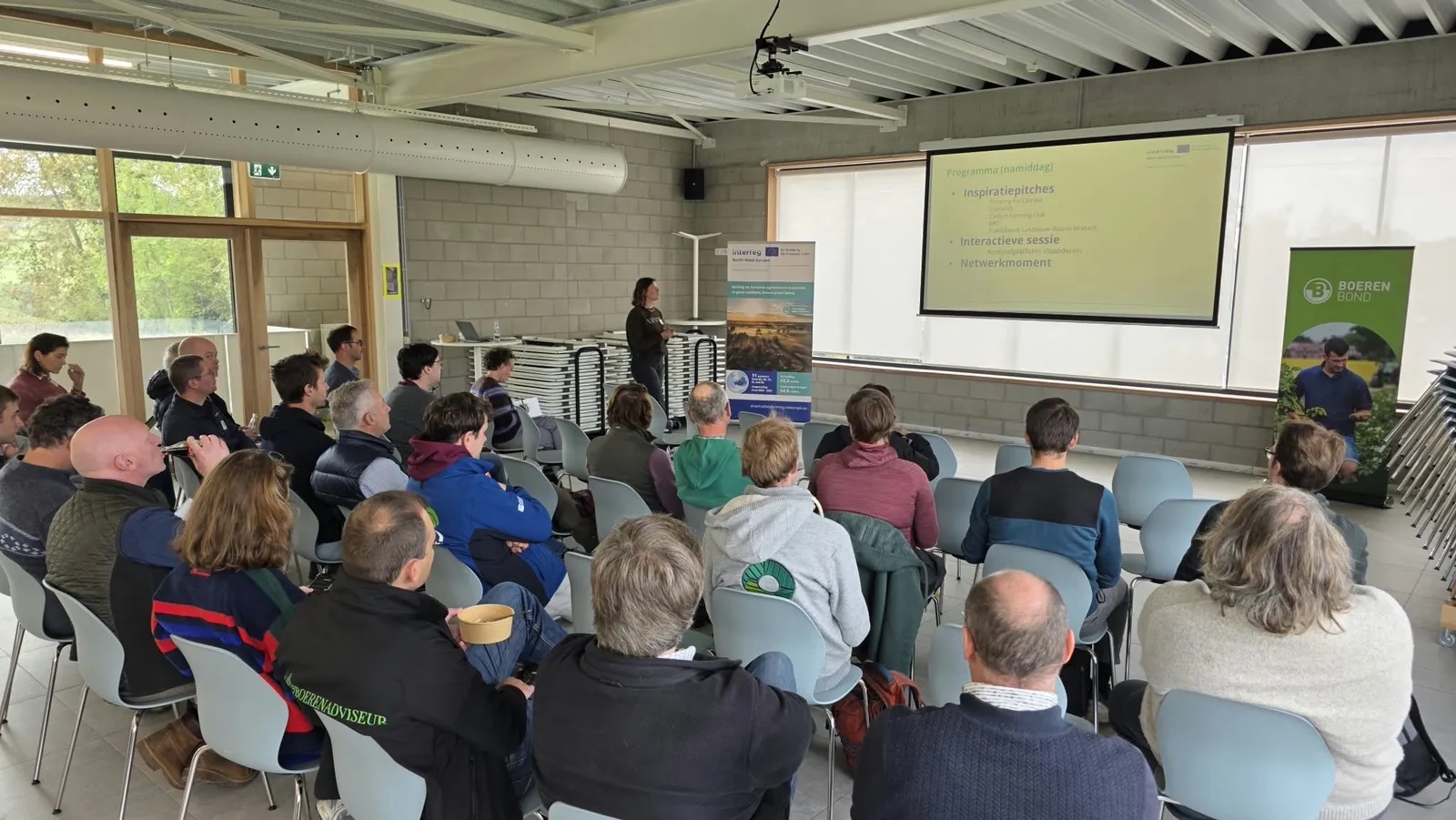
Photo: Participants attend the afternoon session indoors, with the programme on screen.
Praktijkpunt Landbouw Vlaams-Brabant put the whole thing in perspective. Carbon farming is not an end in itself, but one component of good and sustainable soil management, with benefits that extend beyond carbon: improved water management, reduced erosion, increased biodiversity, and more resilient soil. Therefore, it is important not to wait until every benefit is perfectly measurable, not to lose sight of pioneers, and to invest sufficiently in guidance and knowledge building.
Koolstofplatform Vlaanderen concluded with an update on carbon farming in Flanders: how the European framework (CRCF) is being translated into policy, and how companies and farmers can work together on a viable business model.
Seeking solutions together
After all the examples and insights, it was time to combine those different perspectives. In mixed groups, farmers, researchers, agricultural organizations, and financial and commercial players engaged in a dialogue about the bottlenecks that are still hindering carbon farming today.
But we deliberately didn't want to talk only about what is going wrong. The most important question was precisely: what solutions do we see and what is needed to take the next step?
The day concluded with a workshop and numerous discussions afterwards. We did not go home with a ready-made answer for carbon farming, but we did leave with new insights, contacts, and questions to work on together. For if one thing became clear, it is that we need each other. Research, policymakers, companies, and financial players can offer solutions and opportunities, but ultimately, farmers must be able to apply them in the field. Their experience and knowledge are therefore indispensable for further developing carbon farming into something that actually works in practice.