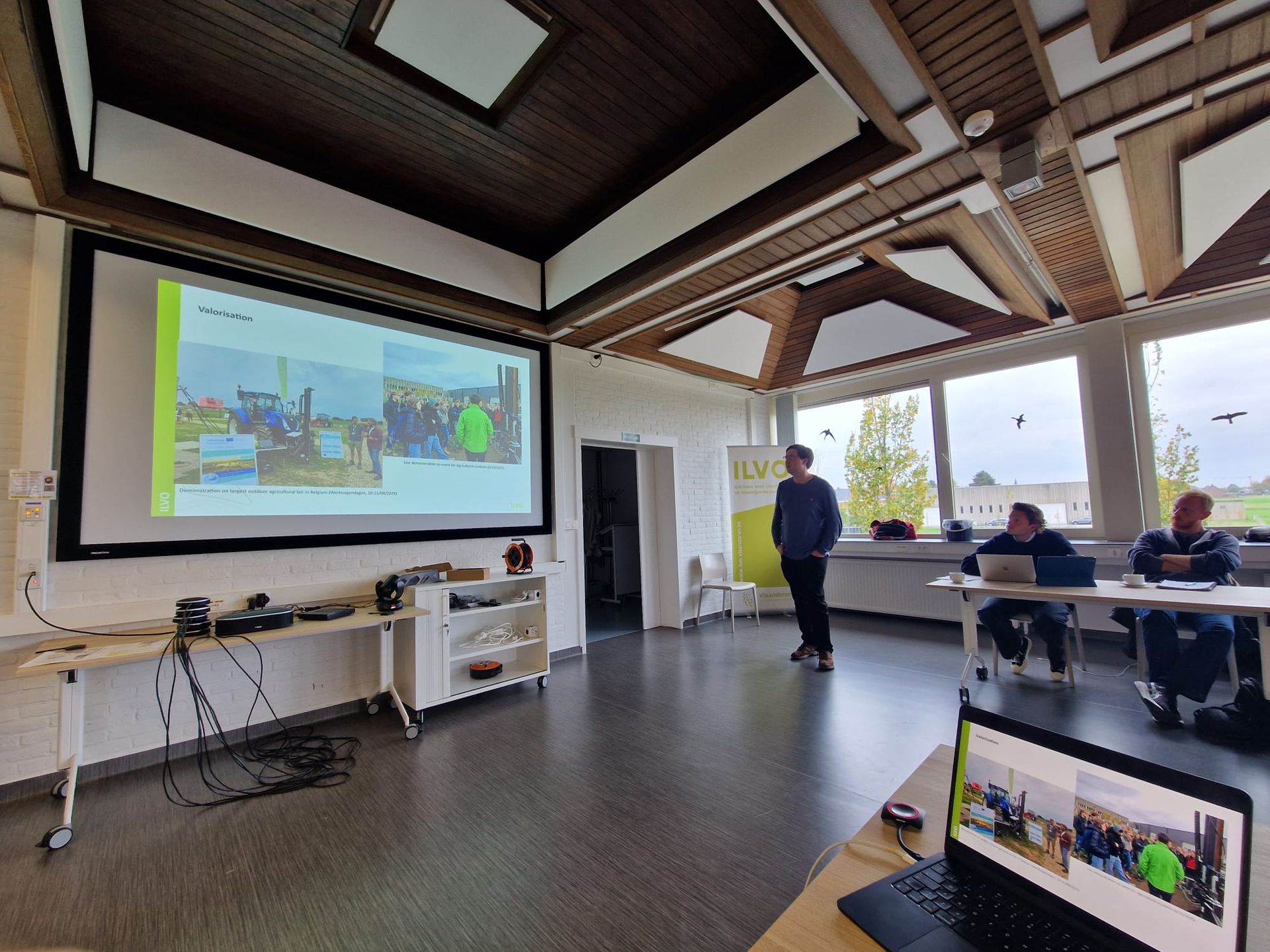
In mid-October, partners from across North-West Europe gathered in Ghent for the sixth Smart Carbon Farming (SCF) meeting, hosted by ILVO. Over three days, researchers, farmers’ organisations, and technology developers came together to showcase new tools, exchange knowledge, and shape the next phase of Europe’s journey toward resilient, climate-positive agriculture.
The event opened in ILVO’s fields, where the project’s latest soil sensing prototypes came to life. Using a combination of an automated soil auger to sample the soil while measuring resistance and spectroscopic technologies, such as spectral imaging and spectrometry, researchers demonstrated how carbon can be measured directly in the soil without manual labor or lab delays. “Seeing machines in action often creates new project ideas,” said ILVO’s Simon Cool as partners watched real-time data feed from the soil auger prototype.
Technical sessions looked at breakthroughs by Multitel and ILVO, such as hyperspectral imaging capable of revealing soil structure and carbon measurement. Satellite data from ConstellR, Soil-Data (Aerovision), and Spatialise will soon complement these insights, providing a multi-layered view of our soils. Together, these innovations aim to make soil carbon monitoring more reliable, transparent, and cost-effective by optimising the sampling spots with smart sampling strategies - a cornerstone for credible carbon markets.
The meeting went far beyond technology. Policy partners explored how the EU’s upcoming Carbon Removal Certification Framework (CRCF) could support farmers and ensure environmental integrity. Capacity building partner Ver de Terre shared updates on the development of the advanced e-learning programme, which can be translated into multiple languages and allows integrated learnings from all partners to reach a wide audience. Furthermore, plans took shape to join the next European Carbon Farming Summit in Padova, aligning our next in-person partner meeting to ensure the full team can join in.
Workshops on farmer engagement also gained momentum. Partners from Boerenbond, ZLTO, and 3N outlined regional strategies for selecting pilot farms in 2026, with open calls ensuring a fair yet targeted approach. The next challenge will be connecting those who manage the land with those who finance the transition, a key part of SCF’s mission.
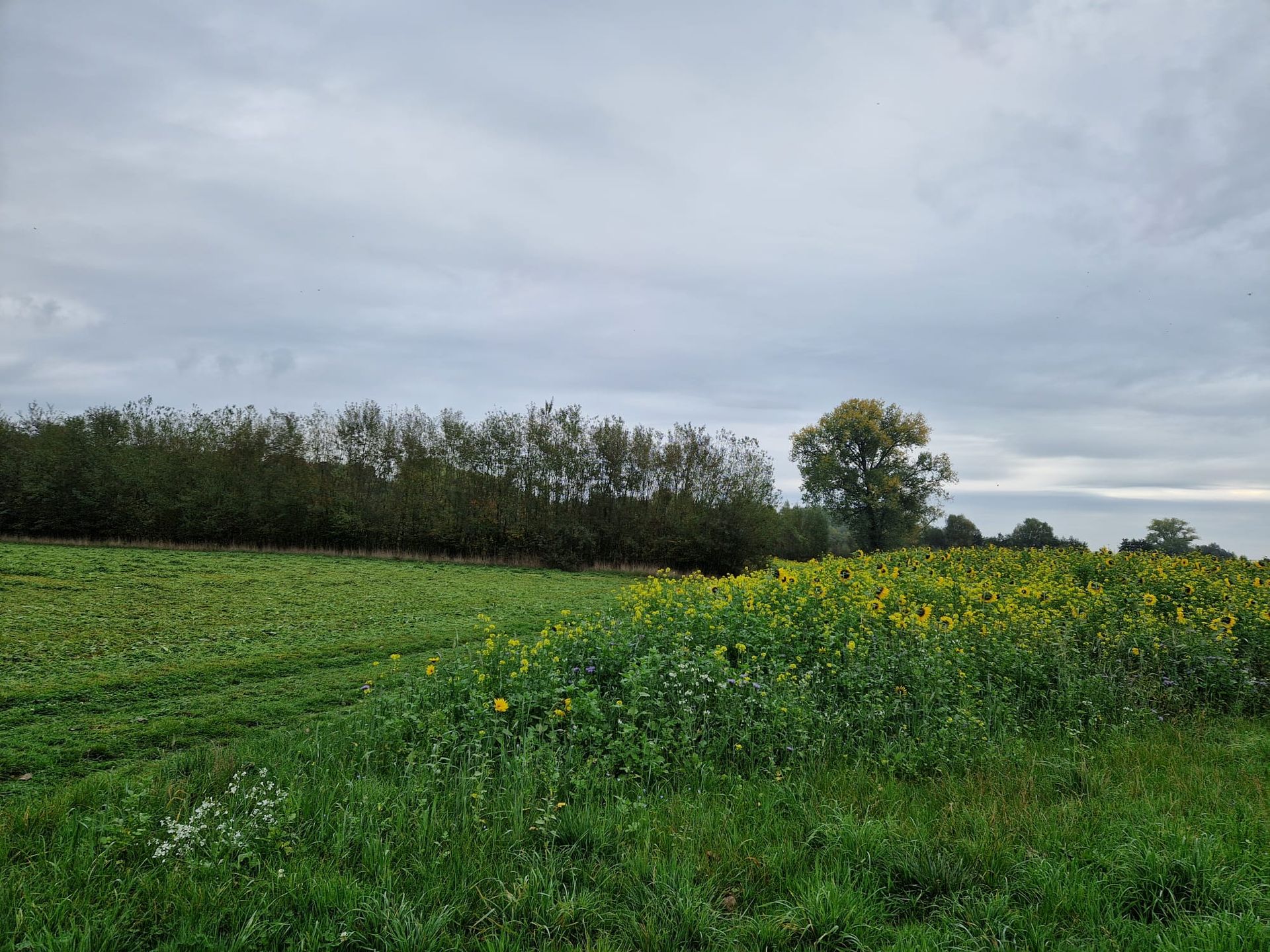
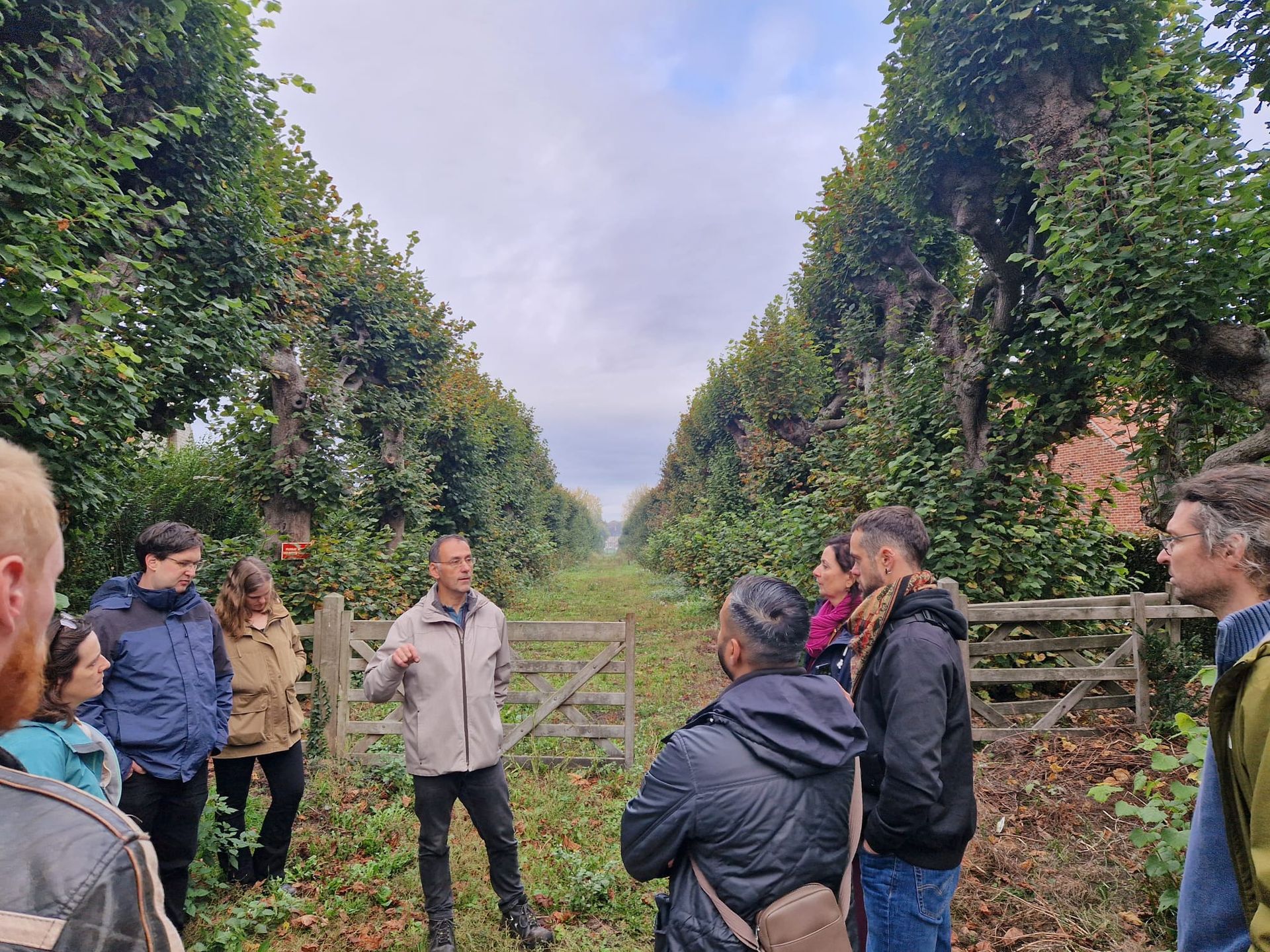
The meeting concluded with a visit to the ecological farm PHAE in Hansbeke, where discussions about data and policy met the lived experience of sustainable farming. A live example of ecological soil care (compost management) was demonstrated, and ecological management was shown and discussed on the fields themselves. Reflections on motivation, risk, and long-term soil care grounded the consortium’s ambitions in everyday practice, reminding everyone that technology and trust must grow side by side.
With field campaigns, policy dialogues, and an e-learning course on the horizon, Smart Carbon Farming is entering a decisive phase. The Ghent meeting both showcased progress and reaffirmed a shared mission: to turn innovative soil science into practical climate action across Europe’s farms.